
tech level liquid indicators High Pressure

CONSTRUCTION
Moisture
indicators feature a hygroscopic element that shifts color from green to yellow
according to the moisture level present in the refrigeration system. These
indicators are manufactured by sintering the sight glass onto a steel retaining
ring, which is then tightened onto the hot‑forged brass body EN 12420 – CW617N.
The sealing interface between the two components is ensured by an EPDM gasket,
providing complete insulation from external contaminants.
The
connection materials vary depending on the series:
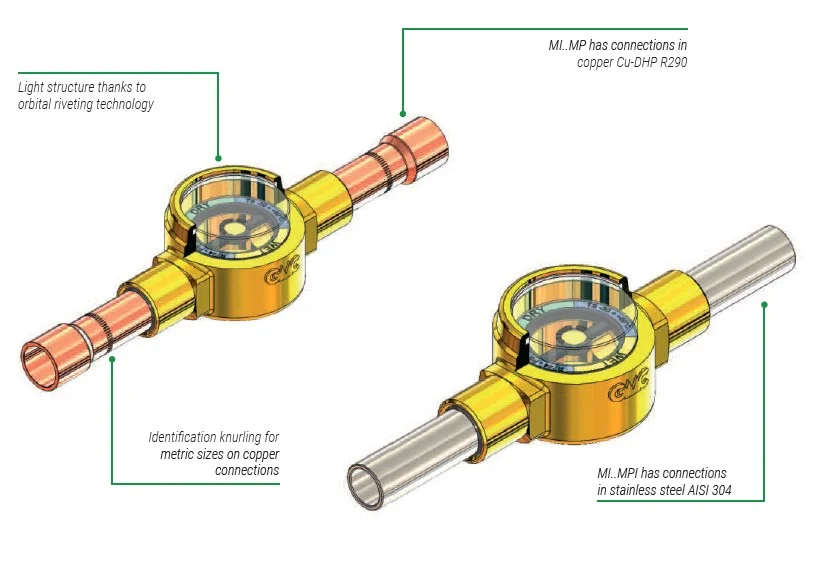
- MI..K series: copper alloy tube EN 12735‑1 – CuFe2P (K65)
- MI..HP series: stainless steel tube AISI 304
INSTALLATION
During
initial system start‑up, the moisture‑sensitive element may appear yellow,
either due to exposure to atmospheric humidity during handling or because of
residual moisture within the circuit. Once the refrigerant’s moisture level is
stabilized through the dehydrator filter, the indicator returns to green.
Indicators of the MI..K and MI..HP series may be installed in any
required orientation.
APPLICATION
Indicators
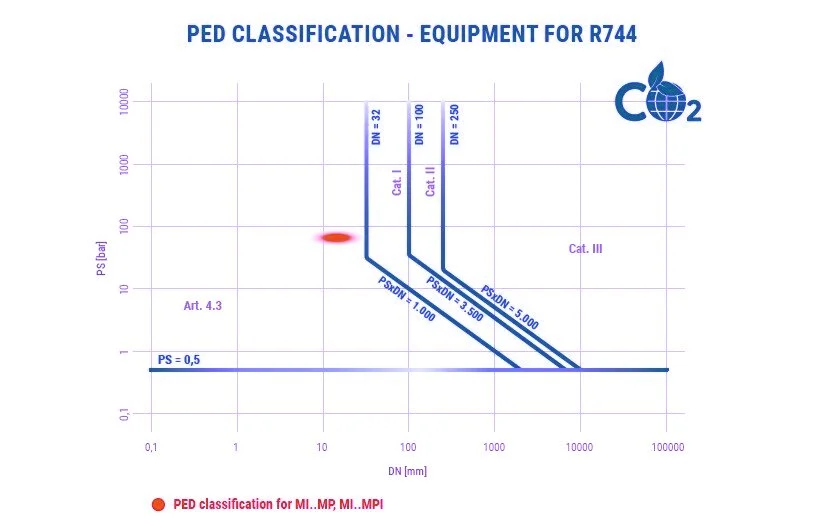
of the MI..K and MI..HP series are classified as “Pressure
accessories” under PED Directive 2014/68/EU, Article 2, paragraph 5. The
entire product range is suitable for use with refrigerant R744 (CO₂),
classified in Article 13, paragraph 1(b) of the PED Directive as a Group 2
fluid — non‑toxic, non‑flammable, and non‑explosive — and listed as A1
class in Annex E of EN 378‑1.
In
accordance with Directive 2014/68/EU, the hazard classification of the product
depends on:
- the type of fluid used (R744),
- intrinsic dimensions (DN),
- maximum design working pressure (PS).
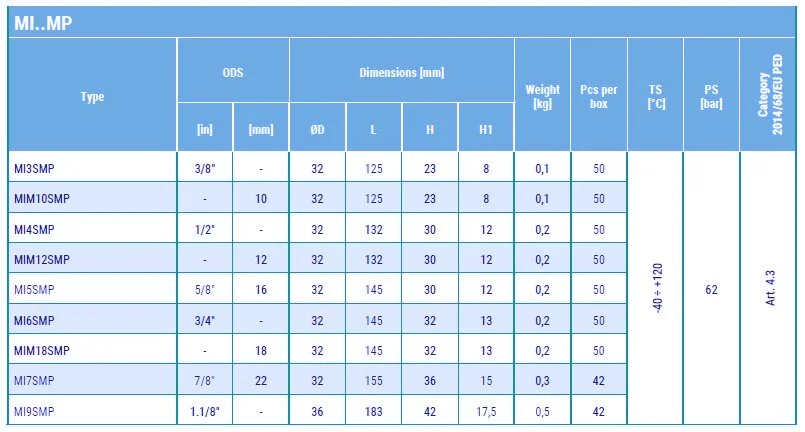
For the MI..K
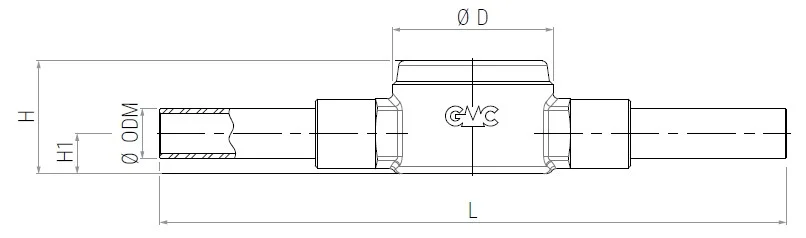
and MI..HP series, internal nominal diameters (DN) range from 9 mm
for the smallest models up to 25 mm for the largest versions. Maximum
operating pressures, as specified in the technical tables, do not exceed 130
bar for both series.
According
to Table 7 of Annex II of PED Directive 2014/68/EU, all products fall
within the scope of Article 4.3.